
Key Takeaways:
- Unplanned maintenance now consumes 21% of plant activity, and each machine-hour of downtime can cost up to $25,000 (500 units/hour at $50 each), based on Manufacturing Impact Analysis, March 25, 2026.
- Digital signage manufacturing downtime reduction of 15–35% is already being achieved using real-time maintenance alerts and live dashboards (Manufacturing Impact Analysis, March 25, 2026).
- Operations leaders can implement this using existing data sources (Power BI, Google Sheets, Excel) displayed on digital signage without heavy IT involvement via Arreya Digital Signage live data integrations.
- Changeovers exceeding one hour on roughly one-third of lines can be cut significantly by visual changeover guides and live queue/status boards (Manufacturing Impact Analysis, March 25, 2026).
- Arreya provides a simple, design-build path to connect plant data to screens and replicate the 15–35% downtime reduction results.
Why Digital Signage Manufacturing Downtime Reduction Matters in 2026
Picture your widget line grinding to a halt. Every hour that critical machine stays down, you lose $25,000—500 units at $50 each, gone. This scenario plays out constantly across manufacturing facilities where unplanned maintenance accounts for 21% of overall plant activity (Manufacturing Impact Analysis, March 25, 2026).
Digital signage manufacturing downtime reduction is one of the highest-ROI moves you can make in 2026. Plants deploying real-time digital displays and maintenance alerts saw an overall 15% downtime reduction, with some achieving up to 35% cuts where instant alerts were implemented (Manufacturing Impact Analysis, March 25, 2026).
This article shows operations and maintenance leaders exactly how to achieve similar results. You will learn how to connect maintenance and production data to digital screens, design effective layouts, and roll out alerts that automatically override regular content when a fault appears.
Arreya Digital Signage software service—known for mission-critical, real-time information in corporate environments—applies the same platform and process to manufacturing screens with live data and instant alerts. For broader context on safety, communication, and culture benefits, see our pillar guide on Digital Signage for Manufacturing: 2026 Guide to Safety, Productivity & ROI. Our productivity article dives deeper into how these same screens drive throughput and labor efficiency.
You will get a copy-and-paste implementation checklist, example KPIs, and practical Arreya configuration tips you can start within your next 30-day improvement cycle.
Why Downtime Is Still the Biggest Hidden Cost in Manufacturing
Unplanned downtime silently erodes margins. With unplanned maintenance consuming 21% of plant activity (Manufacturing Impact Analysis, March 25, 2026), more than one workday a week is lost to firefighting rather than value creation.
Changeovers exceed one hour on approximately one-third of production lines (Manufacturing Impact Analysis, March 25, 2026). If your packaging line runs 3–4 changeovers weekly at 70 minutes each, you lose 3.5–4.5 hours of production every week—over 180 hours annually per line.
The $25,000 per hour downtime cost (500 units/hour at $50 each) means even a 15% reduction in unplanned downtime can restore hundreds of thousands of dollars annually for a mid-sized plant.
Traditional communication methods—radios, emails, paper tags, and word-of-mouth—delay maintenance response, slow changeovers, and create confusion about machine status, technician assignments, and ETAs. Manufacturing teams waste critical minutes just figuring out what is happening.
What this means for your plant: The fastest savings often come not from new machines but from closing the communication gap with digital signage-based, real time visibility.
The Data: 15–35% Downtime Reduction Is Achievable Today
| Benefit | Description and Case Examples |
| Downtime Reduction | Overall 15% downtime reduction, with some cases reporting up to 35% via instant maintenance alerts |
| Faster Changeovers and Decisions | Digital updates replace delays caused by emails and radios; real-time inventory/process tracking cuts defects |
| Case Study: Steel Dynamics | “Truckers’ queue” displays improved morale and logistics efficiency; rollout expanded to 37 screens |
Source: Manufacturing Impact Analysis (L Squared, REACH Media Network, OSHA Digital Safety Communications Studies, U.S. Bureau of Labor Statistics), March 25, 2026.
Breaking Down the 15–35% Downtime Cut
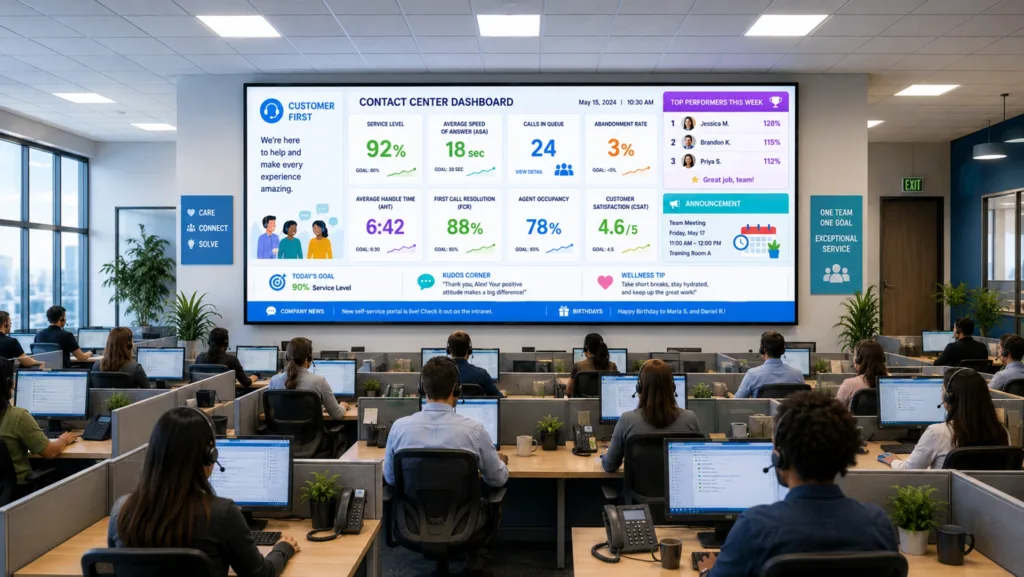
The baseline 15% downtime reduction emerges from faster response to breakdowns, clearer visibility of bottlenecks, and consistent maintenance escalation paths visible on digital screens (Manufacturing Impact Analysis, March 25, 2026).
The upper-end 35% reductions occurred in manufacturing facilities that pushed instant maintenance alerts to key locations—maintenance shops, line entrances, and supervisor stations—ensuring no alert was missed or delayed.
Consider a plant previously losing 20 hours weekly to unplanned stops. A 15–35% cut translates into 3–7 additional productive hours—real money recovered without capital equipment purchases.
Faster Changeovers and Better Decisions
Current-state changeovers often involve paper checklists, radio calls, and missing tools. The improved state uses digital signage showing step-by-step changeover standards, live status, and who is responsible for each task.
Digital updates replace email chains and reduce radio chatter. Real-time inventory/process tracking displayed on screens cuts defects and rework during ramp-up (Manufacturing Impact Analysis, March 25, 2026).
A packaging line cutting average changeover from 70 to 50 minutes by standardizing the workflow visually saves 80+ minutes weekly—time that flows directly to production targets.
How Real-Time Maintenance Alerts and Live Data Actually Work
The technical flow is straightforward: a machine event or data threshold triggers an alert in an existing system (CMMS, MES, SCADA, spreadsheet, or BI dashboard) and Arreya’s digital signage immediately updates all relevant screens with a high-visibility alert.
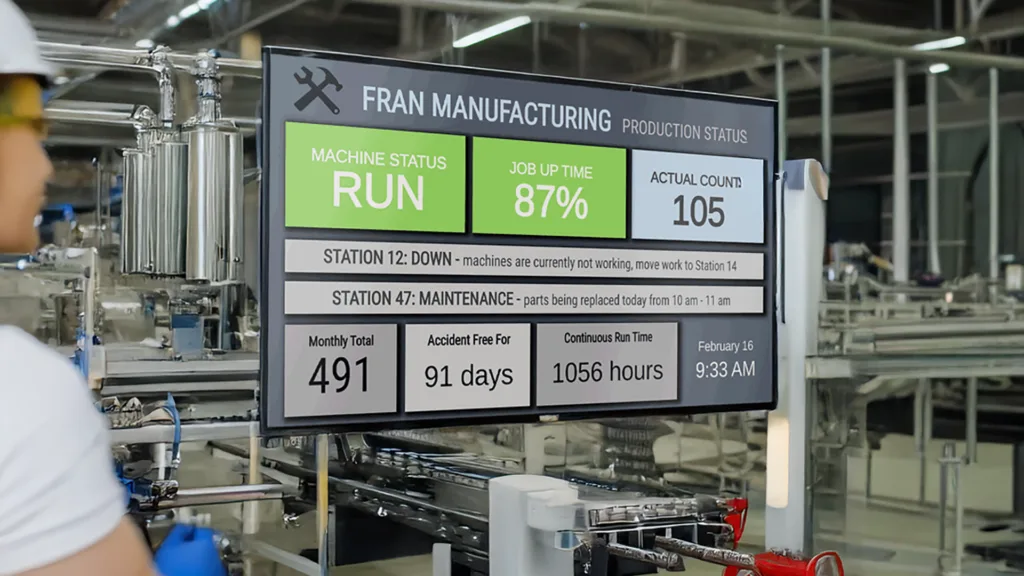
Instant alert overrides: When a fault or alarm condition appears, a full-screen or banner-style “Maintenance Alert” message with machine health status, location, timestamp, and assigned technician takes priority on the affected area’s digital displays until cleared. This proactive communication ensures employees informed of issues immediately.
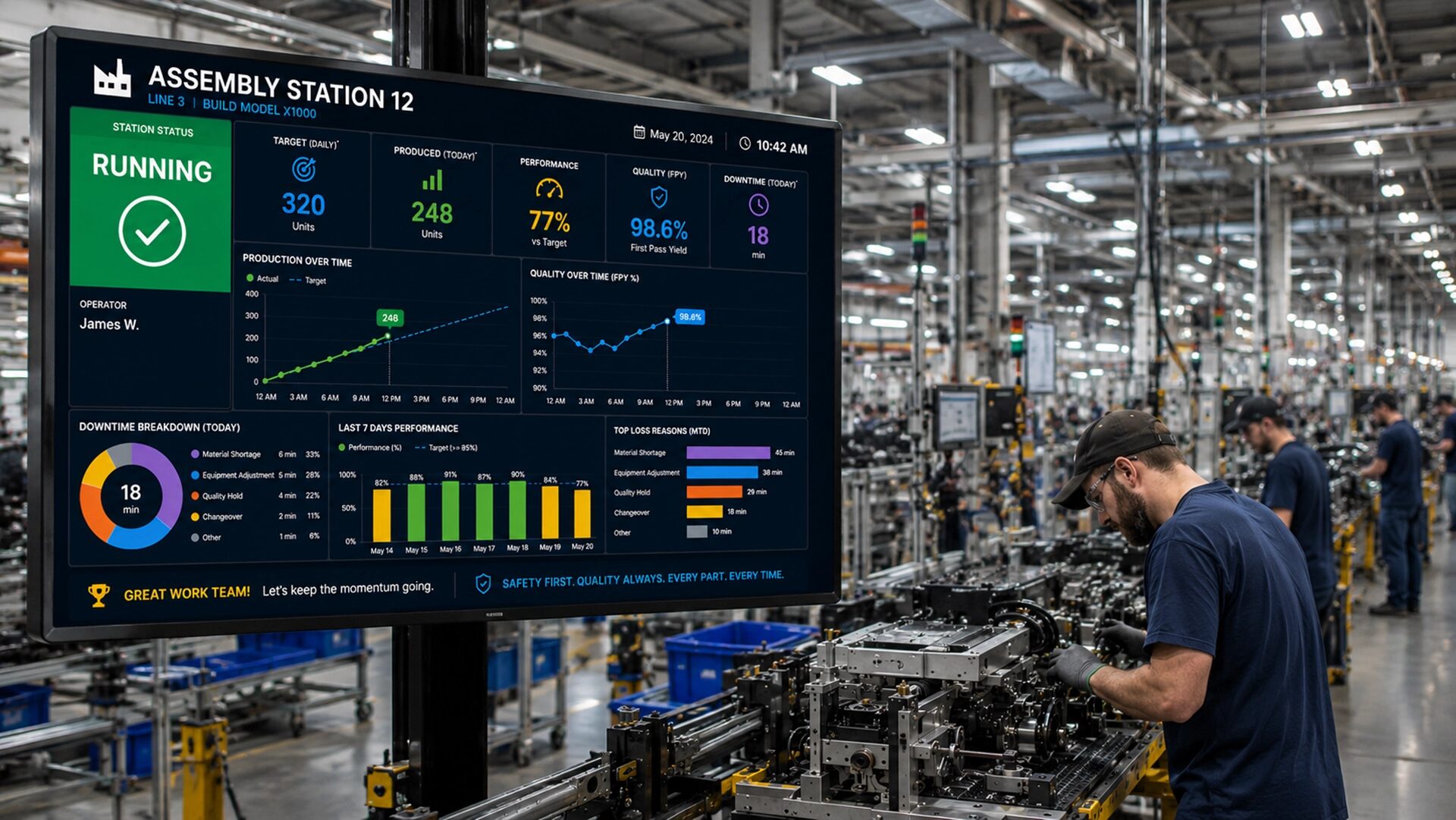
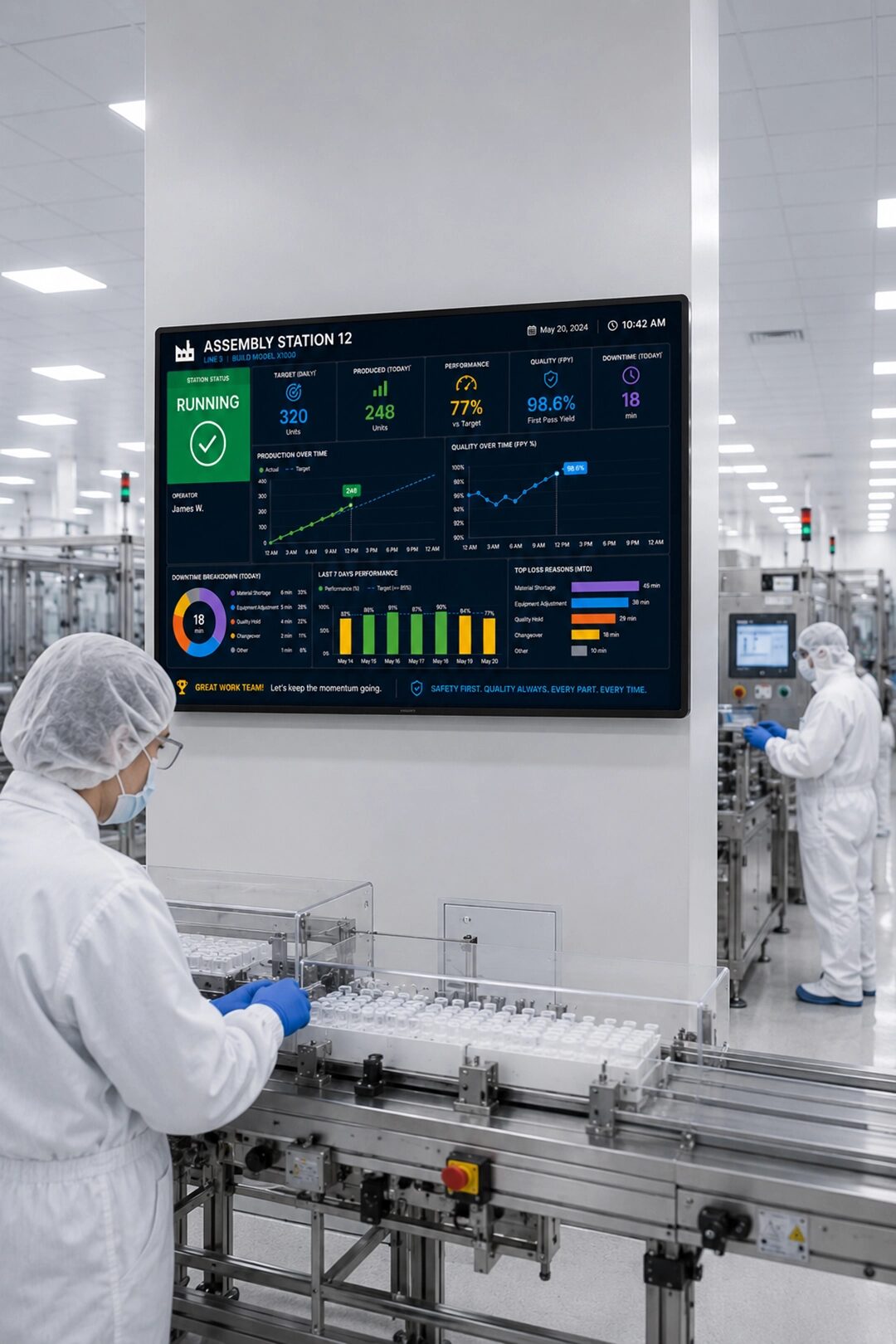
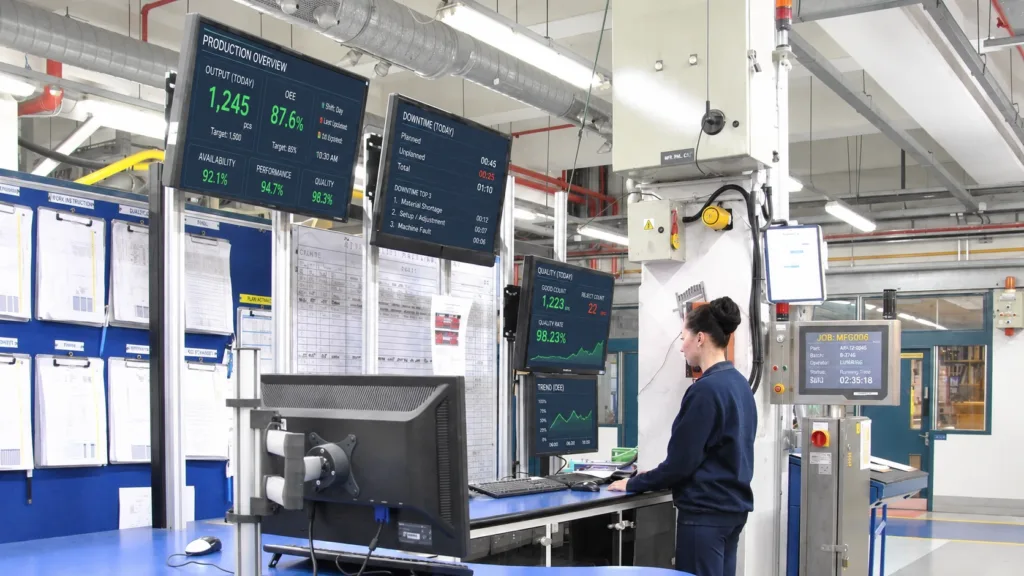
Live inventory and process tracking: Dashboards from Power BI, Google Sheets, Excel, or line-monitoring tools embed as live views on screens, automatically updating takt time, OEE, WIP levels, and queue status without manual refresh. This real time data provides immediate access to critical information.
Automated changeover guidance: Screens at each production line show the current product, target product, changeover checklist, tooling list, and expected completion time—updating in real time as tasks complete or delay.
Arreya’s live data integrations securely display real-time dashboards from existing systems. No custom on-premise player software is required. Cloud-managed with granular permissions, it supports operations, maintenance, and IT teams across multiple locations.
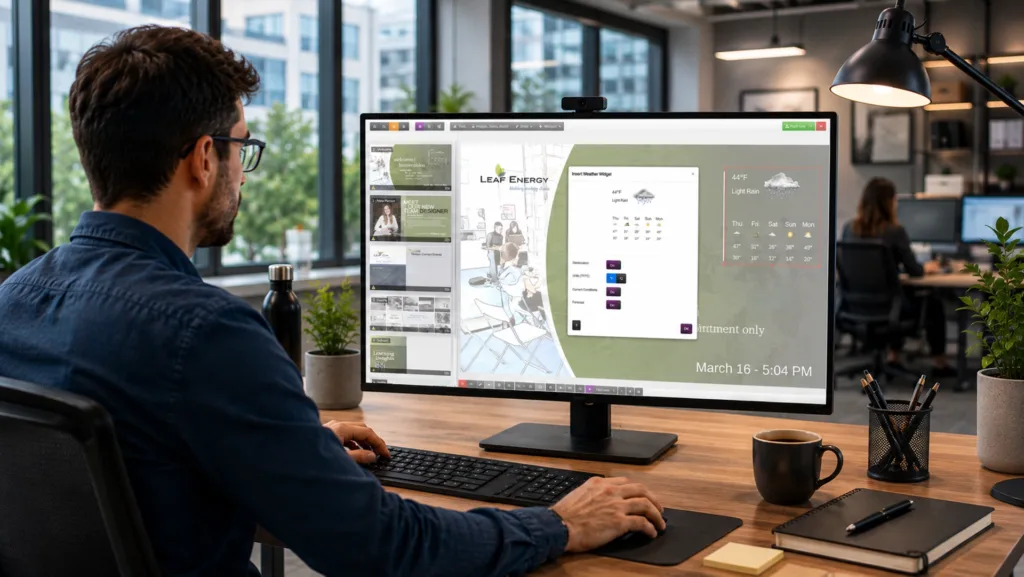
The drag-and-drop Creative Studio lets maintenance teams build templates combining KPIs, alert zones, safety alerts, safety reminders, and even donor-style recognition without writing code. This makes implementing digital signage accessible for manufacturing settings without heavy IT involvement.
Similar to Steel Dynamics’ truckers’ queue, a “maintenance board” on the manufacturing floor displays priority work orders, estimated completion times, and who is on call—reducing confusion and idle time while boosting operational efficiency.
What this means for your plant: You do not need a new MES to start. Arreya can surface existing data in a way that cuts minutes off every downtime event, helping you reduce downtime and boost efficiency immediately.
Step-by-Step Implementation Checklist for Downtime Reduction
Use this 8-step plan over a 60–90 day window to deploy digital signage solutions for downtime reduction:
Define Your Downtime Targets: Select 1–2 pilot lines. Set specific production goals (e.g., cut unplanned downtime by 15% in 90 days; reduce average changeover from 70 to 55 minutes).
Map Critical Events and Data Sources: Identify which machine states, alarms, quality checks, or inventory levels should trigger alerts. Note where that data already lives—CMMS, MES, spreadsheets, BI tools.
Choose Screen Locations: Place digital screens at line entrances, maintenance shops, supervisor areas, break rooms, and main walkways. Strategic placement ensures technicians and operators cannot miss an alert.
Configure Arreya Integrations: Connect Power BI, Google Sheets, Excel, or web dashboards to Arreya. Set secure URLs and test real time updates on a staging display before going live.
Design Maintenance Dashboards in Arreya: Use Creative Studio to build templates with a top alert banner, main KPI tiles (downtime, response time, OEE), live queue/WO list, and space for safety guidelines or recognition when no alerts are active.
Set Up Alert Overrides and Schedules: Configure emergency and maintenance alert overrides so specific events instantly push priority content. Use shift-based scheduling to tailor screens for days, nights, and weekends.
Train Maintenance and Supervisors: Cover how to acknowledge alerts, update work orders, and adjust on-screen content. Arreya’s unlimited users model supports giving instant access to all relevant leads without extra license costs.
Run a 30-Day Pilot and Review: Collect baseline and post-implementation data on downtime and changeovers. Use results to justify scaling to additional lines or multiple sites.
What this means for your plant: A structured, checklist-driven rollout helps teams realize downtime reductions within the same quarter they launch manufacturing digital signage.
Measuring Success: KPIs Maintenance Teams Should Track
Digital signage manufacturing downtime reduction must be measured with hard numbers tied to OEE and financial impact—not just screens installed.
Track these KPIs pre- and post-implementation:
- Unplanned downtime hours per line per week – Direct measure of the 15–35% reduction target
- Average changeover time (by product or SKU family) – Shows workflow standardization impact
- Mean time to respond (MTTRsp) to maintenance alerts – Where instant screen alerts deliver the fastest wins
- Mean time to repair (MTTR) – Measures efficiency once technicians arrive
- OEE Availability on pilot lines – Tracks improved uptime driving increased productivity
- Defects/scrap events during first hour after changeover – Indicates ramp-up quality improvements
Display these KPIs publicly on factory floor screens using the same Arreya-connected dashboards. Ongoing engagement with visible metrics drives continuous improvement behavior and keeps safety top of mind while improving efficiency.
What this means for your plant: What gets displayed gets improved—publishing these KPIs on digital signage reinforces the improvement culture and ensures employees are on the same page.
FAQ
These FAQs address practical implementation questions operations and maintenance leaders often raise.
How fast can we expect to see downtime reductions after deploying digital signage?
Most plants running a focused pilot on 1–2 lines observe measurable improvements in response time and unplanned downtime within 30–60 days, especially once instant alerts are fully configured. The full 15–35% downtime reduction typically emerges over a 3–6 month period as teams refine alerts, screen layouts, and escalation rules (Manufacturing Impact Analysis, March 25, 2026).
What data sources can our digital signage pull from for maintenance and production dashboards?
Common sources include CMMS outputs, MES dashboards, SCADA/HMI web views, ERP reports, Power BI, Google Sheets, Excel files, and custom web-based KPI pages. Arreya displays secure live dashboards from these existing systems, so teams often start by reusing current reports instead of building new ones.
Do we need custom IT integrations or new hardware to get started?
Many mid-sized manufacturing plants launch with existing networked displays or commercial TVs plus affordable media players, with Arreya handling content and data display in the cloud. Deeper integrations (e.g., direct connection to PLCs or on-premise databases) are optional and can be phased in once quick wins from basic dashboards and alerts are proven.
How do maintenance alerts override regular content on the screens?
Arreya allows configuration of “priority channels” or emergency/maintenance alert layers that automatically take over part or all of the screen when a defined event occurs. Once the alert condition is cleared or a technician acknowledges completion, screens revert to their normal rotation of KPIs, safety protocols, and recognition content.
Can Arreya support multiple plants or buildings with different needs?
Arreya manages multiple locations from a single account, with content targeted by building, line, or zone, while still allowing global messages (like corporate safety alerts or compliance requirements) when needed. This multi-site capability comes from Arreya’s experience building networks across large healthcare systems and university campuses and corporate global locations.
Conclusion and Next Steps
The numbers are clear: unplanned maintenance at 21% of plant activity, changeovers exceeding an hour on roughly one-third of lines, and documented 15–35% downtime reductions when instant maintenance alerts and live dashboards are deployed (Manufacturing Impact Analysis, March 25, 2026).
Digital signage manufacturing downtime reduction is not about adding more data. It is about getting the right data—alerts, KPIs, and changeover steps—onto the right screens at the right moment so manufacturing teams can act faster. This digital signage transforms how plants operate, streamline operations, and boost productivity.
Arreya Digital Signage software is a proven design-build partner delivering mission-critical, real-time recognition systems for healthcare and education. The same live data signage capability now applies to manufacturing environments with minimal IT friction.
For broader safety, effective communication, and culture benefits, explore our Digital Signage for Manufacturing: 2026 Guide to Safety, Productivity & ROI. Then read Sub-Article #2 on productivity to turn the same screens into tools for throughput, labor efficiency, and training materials once downtime is under control.
Ready to transform your shift handovers and training programs?
- Email us at Support@arreya.com or call us at 319-294-6671.
References
Manufacturing Impact Analysis (L Squared, REACH Media Network, OSHA Digital Safety Communications Studies, U.S. Bureau of Labor Statistics data on workplace injuries and absenteeism), March 25, 2026.