
Unplanned maintenance still eats up roughly 21% of overall plant activity. Changeovers exceed one hour on about one-third of production lines. And a single machine-hour of downtime can cost $25,000 or more — for example, a widget line running 500 units per hour at $50 each.
These numbers are not theoretical. They are the daily reality for plant managers, operations directors, and safety leaders in 2026. Yet many facilities continue to rely on static bulletin boards, printed memos, emails, radios, and shift huddles that no one fully sees or remembers.
That gap between what the plant needs and what traditional communication can actually deliver is exactly why digital signage is rapidly moving from “nice-to-have” to “essential” in manufacturing this year.
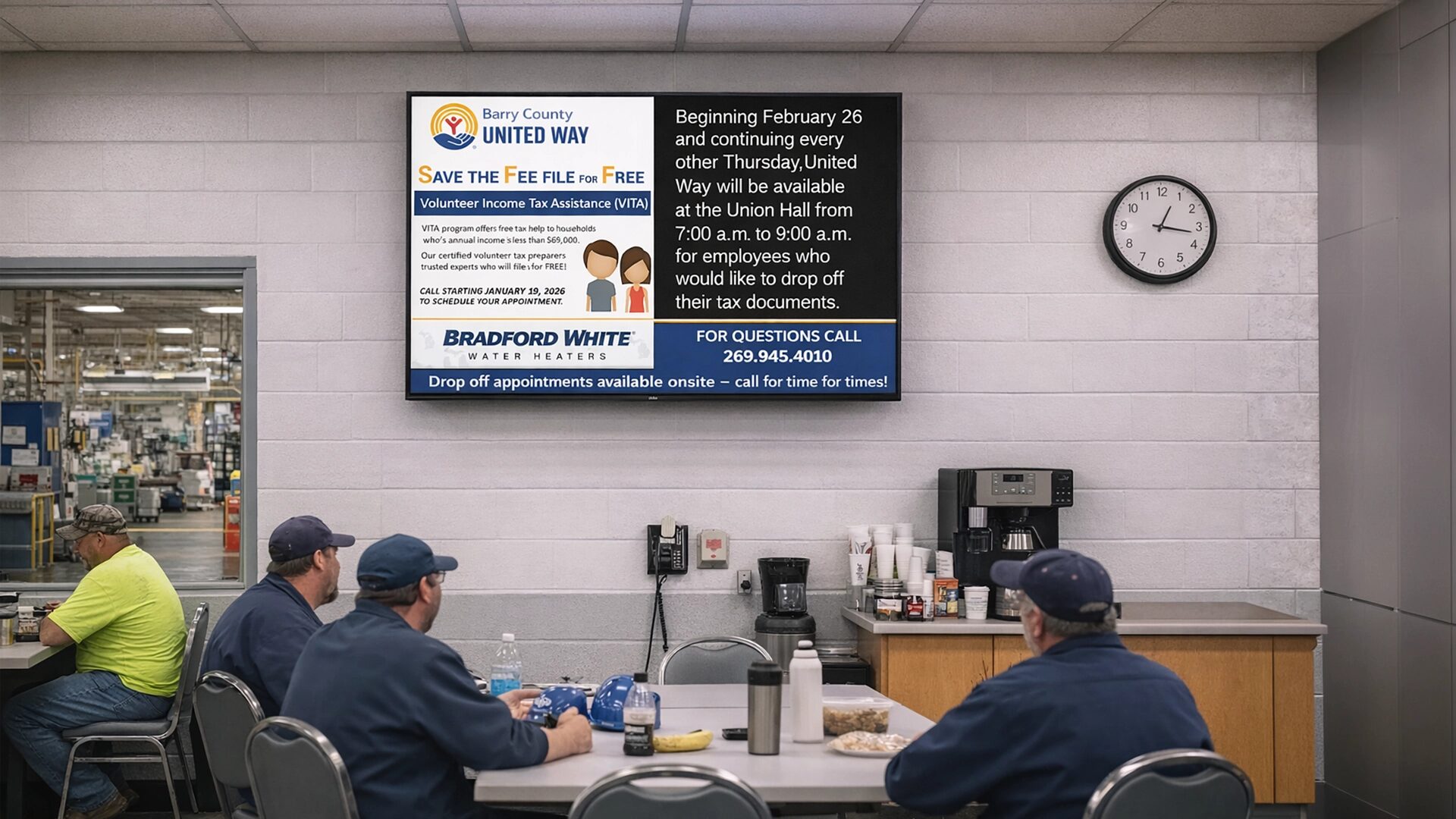
Real-time screens placed on production floors, in breakrooms, warehouses, and loading docks deliver live KPIs, safety alerts, shift updates, and training content that everyone can see at the same time. The latest 2024–2026 industry benchmarks show clear, measurable returns: $4–$6 back for every $1 invested in safety and communication tools, with mid-sized plants typically reaching full payback in 12–18 months.
This article explains why 2026 is the tipping point, what the hard data actually shows, and how forward-thinking manufacturers are using digital signage to cut downtime, reduce injuries, and improve daily operations — without adding heavy IT overhead.
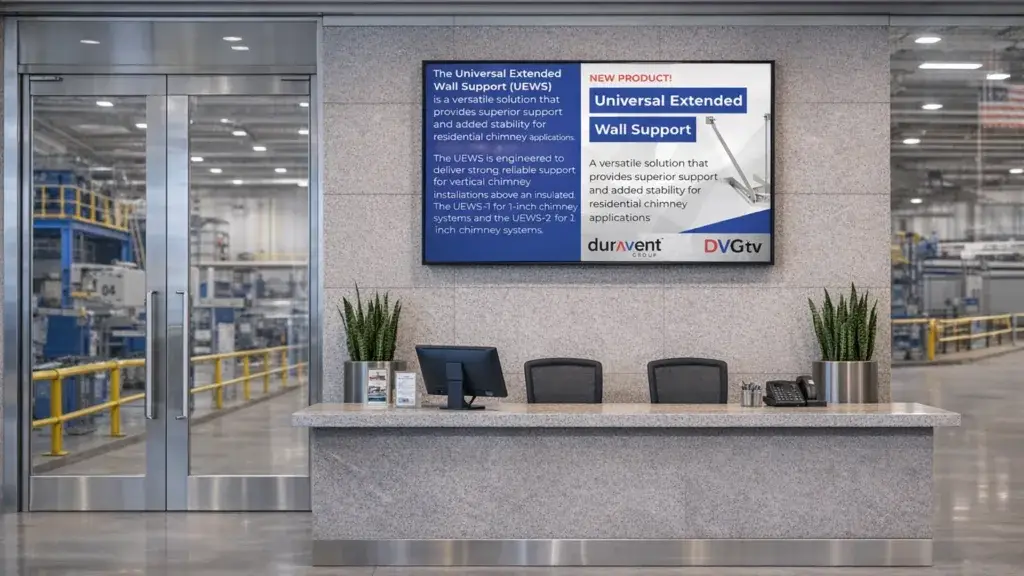
The Real Cost of Doing Nothing
Imagine a typical 2026 plant morning. A quality specification changes at 8:00 a.m. It gets printed, posted on a board near the supervisor’s office, and mentioned quickly at the day-shift huddle. By the time the night shift starts, most operators have never seen the update. Scrap rates climb. Rework piles up.
Poor communication creates five expensive problems that repeat every single day:
- Messages get lost or delayed between shifts.
- Production issues surface too late for quick fixes.
- Work instructions become outdated almost immediately.
- Safety alerts blend into the background and get ignored.
- Departments stay siloed — maintenance doesn’t know what production actually needs today.
One serious incident or missed changeover can erase an entire shift’s profit margin. When you add up unplanned downtime, higher workers’ compensation claims, and lost output, the financial impact is enormous.
What this means for you: If your current communication tools are static or manual, you are paying a hidden tax every hour the plant runs. Digital signage eliminates that tax by making information impossible to miss and instantly updatable.
Four Proven Ways Digital Signage Delivers Results in 2026
Recent benchmarks from 2024–2026 show digital signage consistently improves four key areas that matter most to manufacturing leaders.
1. Safety & Absenteeism
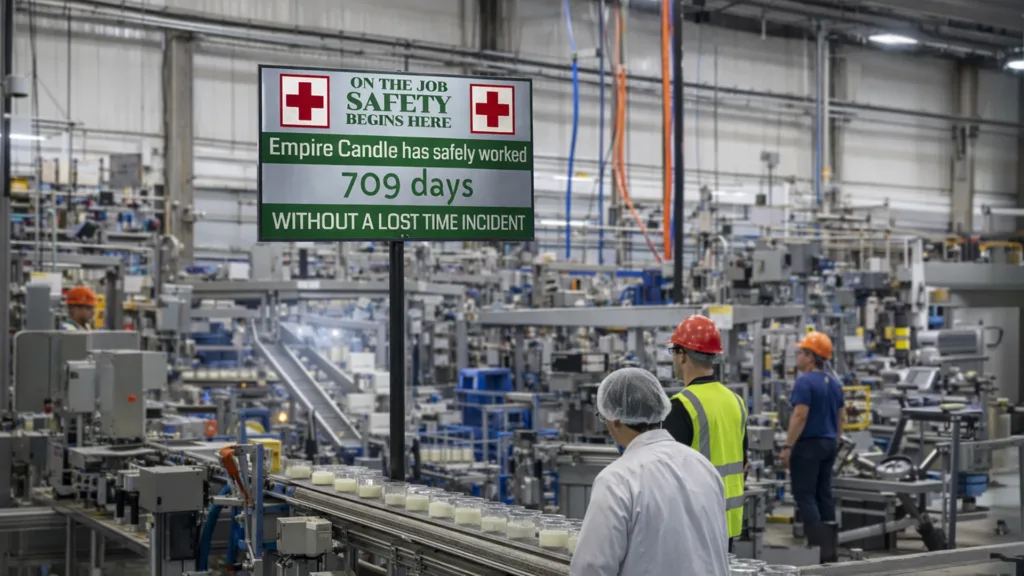
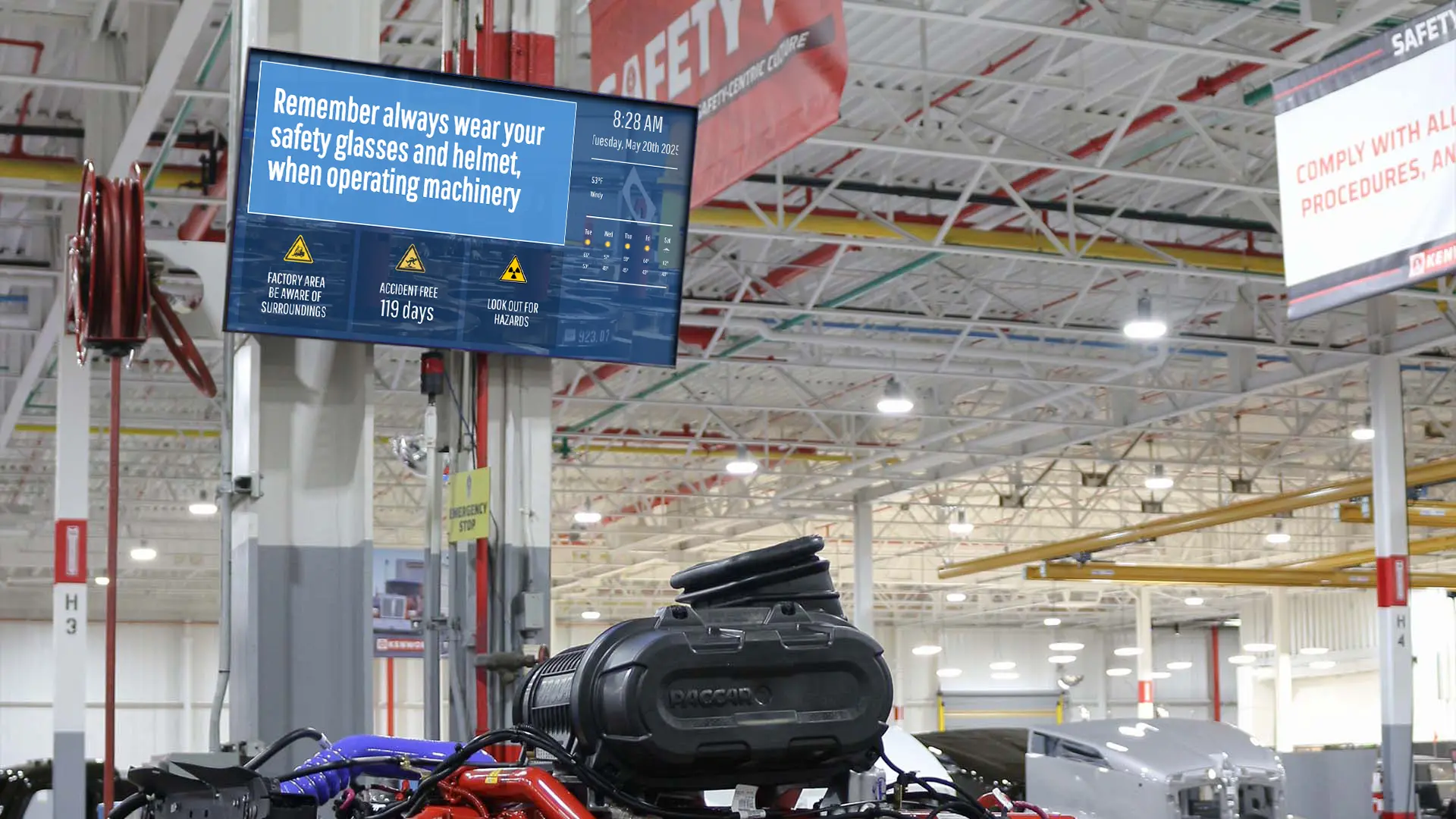
Safety is no longer just a compliance checkbox — it is a direct driver of uptime and profitability. Real-time digital messaging dramatically reduces on-site risks.
| Impact Metric | Typical Improvement |
| Injury Reduction | ~20% decrease through continual, updated safety reminders |
| Incident & Absenteeism Reduction | Health and safety incidents + absenteeism drop nearly 50% when real-time data is displayed visibly |
| Compensation Claims | Up to 25% decline in claims; 15% less downtime from accidents |
| Operational Benefits | Lower workers’ compensation payouts, reduced sick leave, minimized production halts, proactive malfunction alerts |
What this means for you: One serious incident can shut down an entire line. Digital signage turns safety from a poster on the wall into a live, always-visible system that actually prevents incidents.
2. Productivity & Workflows
Real-time visibility into uptime, downtime, output, and quality metrics aligns every team member instantly.
| Benefit | Typical Improvement / Example |
| Productivity Increase | ~25% gain with live display of operational metrics |
| Downtime Reduction | Overall 15% reduction; up to 35% via instant maintenance alerts |
| Faster Changeovers & Decisions | Digital updates replace email/radio delays; real-time inventory tracking cuts defects |
| Case Example: Steel Dynamics | “Truckers’ queue” displays improved morale and logistics efficiency; rollout expanded to 37 screens |
| Case Example: Warn Automotive | Streamlined communications replaced lengthy meetings and PowerPoints |
| Case Example: Rainbow Energy | PowerBI metrics and dynamic content enhanced staff focus in a high-intensity environment |
What this means for you: Operators no longer wait for end-of-shift reports. They see the data where the work happens and can fix issues in minutes instead of hours.
3. Internal Communication & Training
Centralized screens replace fragmented methods such as emails, radios, and printed memos.
| Statistic or Feature | Impact |
| Adoption Rate | 90% of manufacturers use digital signage for productivity and employee training, including bite-sized modules and interactive quizzes |
| Error Reduction | Eliminates chasing information; significantly reduces errors and speeds shift handoffs |
| Multilingual Support | Supports diverse workforces with remote content management |
| Training Efficiency | Automated training and wellness programs cut time and manpower vs. traditional sessions |
What this means for you: New hires onboard faster, shift handovers become seamless, and training actually sticks because it is visual and available exactly when and where people need it.
4. Engagement & Morale
Dynamic digital content outperforms static boards in keeping workers informed, recognized, and motivated.
| Engagement Factor | Outcome |
| Visible Recognition | Celebrations of anniversaries, achievements, and motivational messages boost morale noticeably |
| Interactive Displays | Breakroom screens generate far more interaction than posters or static slides |
| Burnout and Turnover | Increased engagement decreases burnout and voluntary turnover in high-pressure settings |
What this means for you: In a tight labor market, small daily touches of recognition and transparency make a measurable difference in retention and daily attitude on the floor.
Why 2026 Is the Perfect Time to Act
Three major shifts are converging right now:
- AI-powered predictive alerts that detect equipment anomalies before failures occur.
- Seamless IoT and ERP/MES integration that pushes live machine and process data straight to the floor.
- Modern cloud platforms that run securely in harsh environments with almost zero IT overhead.
Platforms built on Chrome Enterprise Recommended hardware, for example, deliver 24/7 reliability, kiosk-mode lockdown, and automatic updates even in dusty, high-vibration plants. Unlimited user seats mean every supervisor, safety lead, and HR coordinator can contribute content instantly from any browser — no software downloads or per-user licensing headaches.
The Full Picture Is Coming Soon
This article gives you the high-level “why.” In the coming weeks we will publish the complete Ultimate Guide to Digital Signage for Manufacturing in 2026, which will include full deployment checklists, expanded case studies, best practices for content and placement, future trends through 2030, and a ready-to-use 2026 Content Calendar Template.
FAQ
- How much does digital signage typically cost in 2026?
Mid-sized plants usually see full payback in 12–18 months. Exact investment depends on the number of screens and integrations, but the ongoing cost is low with cloud-native platforms. - Do I need a dedicated IT team to manage it?
Modern cloud solutions are built for operations and safety teams to manage directly. Browser-based updates and automatic security patches keep IT involvement to a minimum (usually just initial network access). - How long until we see measurable results?
Most plants notice improvements in communication and morale within the first 30 days. Safety and productivity gains typically appear within 60–90 days once content is live and teams are trained.
Ready to Get Started Today?
You do not need to wait for the full guide to begin seeing results.
Schedule a no-pressure Arreya manufacturing demo — we’ll show you exactly how these numbers can apply inside your plant in a 15–20 minute call tailored to your operation.
Both options are risk-free and designed to give you actionable next steps immediately.
References
Manufacturing Impact Analysis (L Squared, REACH Media Network, OSHA Digital Safety Communications Studies, U.S. Bureau of Labor Statistics data on workplace injuries and absenteeism), March 25, 2026. All statistics in this article are drawn directly from this document.